
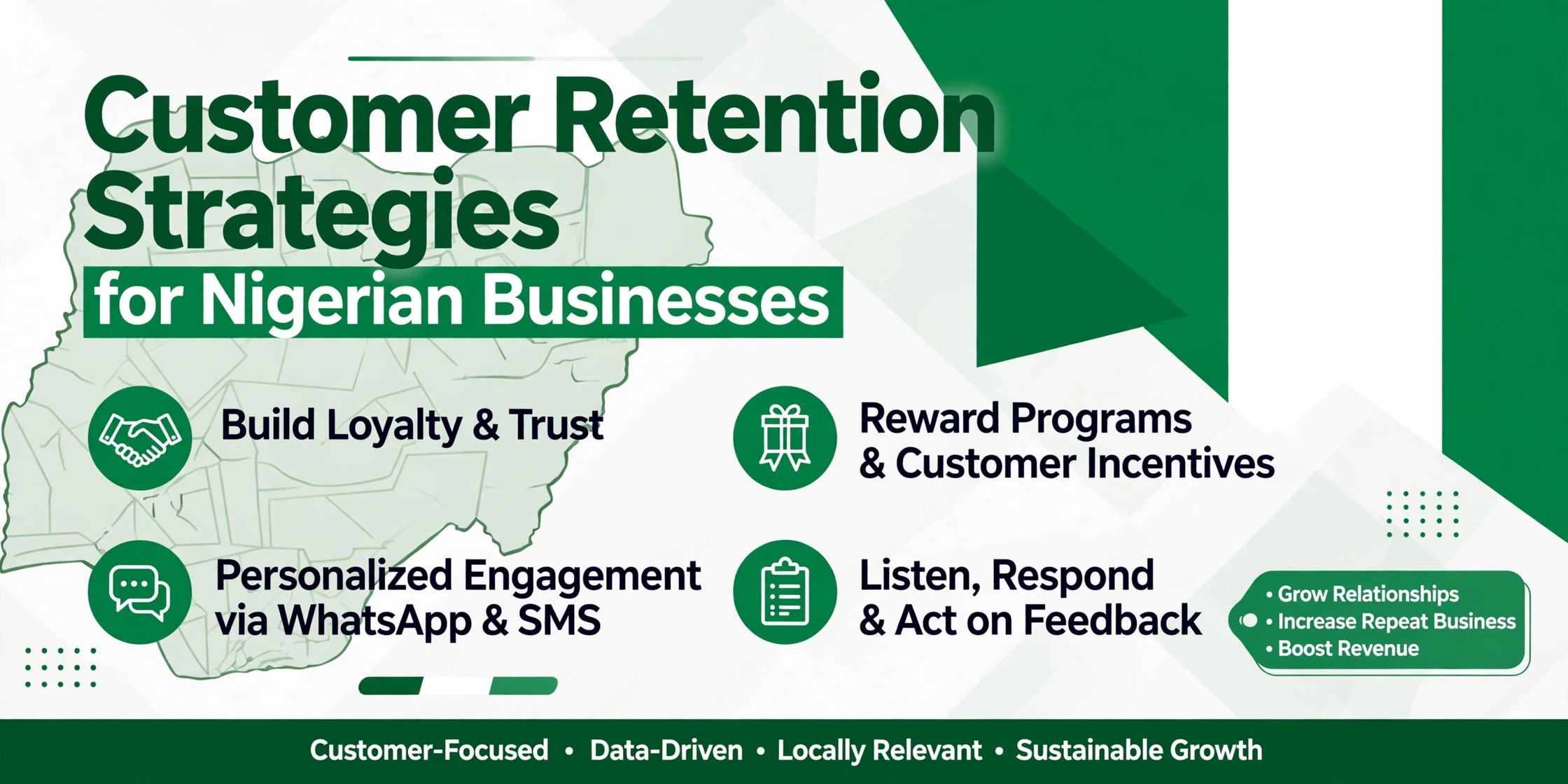
Customer Retention Strategies for Small Businesses in Nigeria
Attracting new customers is an important part of running a business, but long-term business growth does not depend on new customers alone. Businesses also need to give existing customers good reasons to return, make repeat purchases and recommend their products or services to others.
Customer retention is the process of building relationships that encourage customers to continue buying from a business over time. For small businesses in Nigeria, a strong retention strategy can support consistent sales, reduce the pressure of constantly finding new buyers and improve business reputation.
Whether you operate a retail shop in Lagos, a logistics company in Rivers State, a fashion business in Abuja or a professional service in Kano, keeping customers satisfied can make a significant difference to your growth.
What Is Customer Retention?
Customer retention refers to a business's ability to maintain relationships with existing customers and encourage them to continue using its products or services.
It goes beyond completing a single transaction. It involves understanding customer expectations, delivering consistent value, communicating effectively and resolving problems when they arise.
For example, a customer who buys clothing from an online fashion store may return because the products match their descriptions, delivery is reliable and the seller communicates professionally. These positive experiences create trust and encourage repeat purchases.
Why Customer Retention Matters for Nigerian Businesses
1. Encourages Repeat Sales
Customers who have had a positive experience are more likely to purchase again. Repeat sales provide businesses with opportunities to generate revenue from relationships they have already established.
2. Reduces Customer Acquisition Pressure
Finding new customers requires time, marketing effort and sometimes significant advertising costs. Retaining existing customers gives businesses another source of sales without depending entirely on new customer acquisition.
3. Builds Business Reputation
Satisfied customers may recommend a business to friends, colleagues and family members. Positive recommendations can help a small business attract new buyers through word of mouth.
4. Improves Revenue Predictability
Businesses with returning customers may find it easier to estimate demand, plan inventory and manage operations. This is particularly useful for businesses that sell regularly purchased products or provide ongoing services.
5. Creates a Competitive Advantage
Customers do not always choose a business based on price alone. Reliable service, professional communication, convenience and consistent product quality can encourage customers to remain loyal even when other options are available.
10 Practical Customer Retention Strategies for Small Businesses
1. Deliver Consistent Product and Service Quality
Customers expect a business to maintain the quality that attracted them in the first place. If the quality of products or services changes without explanation, customers may lose confidence.
Set clear quality standards, inspect products before delivery and make sure employees understand the level of service expected. Consistency helps customers know what to expect every time they buy from you.
2. Provide Excellent Customer Service
Customer service should not end immediately after payment. Respond to enquiries, provide accurate information, communicate delivery updates and address complaints professionally.
For businesses using WhatsApp, Instagram or telephone calls to communicate with customers, timely and respectful responses can improve the overall buying experience.
3. Follow Up After Every Important Purchase
A simple follow-up message can show customers that your business values their experience. Ask whether they received their order, whether the product met expectations or whether they need further assistance.
For service businesses, follow up after completing a project to confirm customer satisfaction and identify opportunities for future work.
4. Introduce Customer Loyalty Rewards
Rewarding repeat customers can encourage them to continue buying from your business. You do not need an expensive loyalty programme to get started.
- Offer discounts after a certain number of purchases.
- Provide special offers to returning customers.
- Give loyal customers early access to new products.
- Offer referral rewards when existing customers introduce new buyers.
Make sure rewards are financially sustainable and easy for customers to understand.
5. Communicate Beyond the Point of Sale
Do not contact customers only when you want them to make another purchase. Share useful information, product updates, relevant offers and helpful advice that adds value to the relationship.
WhatsApp broadcasts, email newsletters and social media updates can support this process. However, avoid sending excessive promotional messages. Respect customer preferences and obtain appropriate consent before sending marketing communications.
6. Make Complaints Easy to Resolve
Problems can happen in any business. Orders may be delayed, products may arrive damaged or customers may misunderstand a service agreement.
What matters is how the business responds. Give customers a clear way to report problems, acknowledge genuine concerns and explain the steps being taken to resolve them.
A professional complaint-handling process can help rebuild confidence and prevent a single bad experience from ending an otherwise valuable customer relationship.
7. Understand What Your Customers Actually Want
Customer preferences can change over time. A business that understands its customers can adjust its products, pricing, communication and service delivery accordingly.
Ask customers for feedback, review frequently asked questions and pay attention to the products or services they purchase most often.
You can use short surveys, customer interviews and purchase records to identify what customers appreciate and what needs improvement.
8. Make Buying from Your Business Convenient
Customers are more likely to return when the buying process is straightforward. Make it easy to find your business, understand your prices, ask questions, place orders and complete payments.
Keep your business contact details updated, explain delivery arrangements clearly and provide simple instructions for accessing your services.
9. Personalise the Customer Experience
Customers appreciate businesses that understand their needs. Where appropriate, remember their preferences, recommend relevant products and communicate in a way that suits their buying habits.
For example, a furniture retailer may inform a previous customer about a new collection that matches their interests, while a professional service provider may send a reminder when a client is due for another service.
10. Maintain a Strong Online Business Presence
Customers often search online before deciding whether to contact or purchase from a business. An accurate and informative online profile helps existing customers reconnect with you and allows potential customers to understand what you offer.
Keep your business description, location, phone number, website, operating hours and service information updated. Share relevant updates and make it easy for customers to reach your business through their preferred communication channels.
How to Measure Customer Retention
Customer retention should be measured rather than treated as an assumption. Small businesses can start with a few straightforward indicators.
Customer Retention Rate
This measures the percentage of customers a business retains over a specific period.
Formula:
Customer Retention Rate = ((Customers at the End of Period - New Customers Acquired) / Customers at the Start of Period) × 100
For example, if a business starts the month with 100 customers, acquires 30 new customers and ends with 110 customers, its retention rate is 80%.
Repeat Purchase Rate
This measures the proportion of customers who make more than one purchase during a selected period. It helps retailers and ecommerce businesses understand whether customers are returning after their first transaction.
Customer Feedback
Track complaints, positive reviews, customer satisfaction and recurring service issues. Feedback can reveal problems that sales figures alone may not show.
Referral Activity
Monitor how many new enquiries or sales come from recommendations by existing customers. A steady flow of referrals may indicate that customers trust your business and are willing to recommend it.
Common Customer Retention Mistakes to Avoid
- Ignoring existing customers: Focusing entirely on new buyers can make loyal customers feel undervalued.
- Making promises you cannot keep: Unrealistic delivery times, exaggerated claims and unreliable commitments damage trust.
- Providing inconsistent service: Customers may stop returning when the experience changes significantly between purchases.
- Ignoring complaints: Unresolved problems can damage customer relationships and business reputation.
- Sending excessive promotions: Too many messages can frustrate customers and cause them to disengage.
- Competing only on price: Sustainable customer relationships should also be built on quality, convenience and reliability.
Customer Retention Opportunities Across Nigeria
Businesses across Nigeria can benefit from stronger customer relationships, regardless of their size or industry. Retailers, restaurants, manufacturers, logistics companies, educational providers, technology businesses and professional service firms all depend on customer satisfaction and repeat business in different ways.
These opportunities exist across all 36 states and the Federal Capital Territory, including Abia, Adamawa, Akwa Ibom, Anambra, Bauchi, Bayelsa, Benue, Borno, Cross River, Delta, Ebonyi, Edo, Ekiti, Enugu, Gombe, Imo, Jigawa, Kaduna, Kano, Katsina, Kebbi, Kogi, Kwara, Lagos, Nasarawa, Niger, Ogun, Ondo, Osun, Oyo, Plateau, Rivers, Sokoto, Taraba, Yobe, Zamfara and Abuja.
Although customer expectations may differ between industries and locations, businesses everywhere can benefit from reliable service, clear communication and a consistent customer experience.
Frequently Asked Questions About Customer Retention
What is the best way to retain customers in Nigeria?
There is no single strategy that works for every business. Consistent product quality, excellent customer service, timely communication, convenient purchasing and effective complaint resolution are practical starting points.
Why do customers stop buying from a business?
Customers may stop buying because of poor service, inconsistent quality, high prices, delayed delivery, unresolved complaints or more convenient alternatives. Understanding the reason is the first step towards improving retention.
How can a small business encourage repeat purchases?
A small business can encourage repeat purchases through follow-up messages, loyalty rewards, personalised offers, useful product updates and consistently positive customer experiences.
Is customer retention more important than acquiring new customers?
Both are important. Customer acquisition introduces new buyers to a business, while customer retention helps build lasting relationships and repeat sales. A sustainable growth strategy should balance both activities.
Can online visibility help with customer retention?
Yes. An accurate online business profile makes it easier for existing customers to find contact information, view updated services and reconnect with a business. It also helps new customers discover the business.
Conclusion
Customer retention is an important part of building a sustainable business in Nigeria. While attracting new customers can create growth opportunities, maintaining positive relationships with existing customers helps businesses encourage repeat sales, strengthen their reputation and develop a more reliable customer base.
Start by improving the quality of your products and services, communicating consistently, listening to customer feedback and making every buying experience convenient. Small improvements applied consistently can make a meaningful difference over time.
For businesses looking to strengthen their online presence and become easier to discover, visit Adspero.com. Explore business visibility and promotional opportunities that can help customers searching online find your business and learn more about what you offer.
Recent Posts



Get Your Business Discovered
Put your brand in front of thousands of Nigerian customers today.
Start Ads View pricing plans →